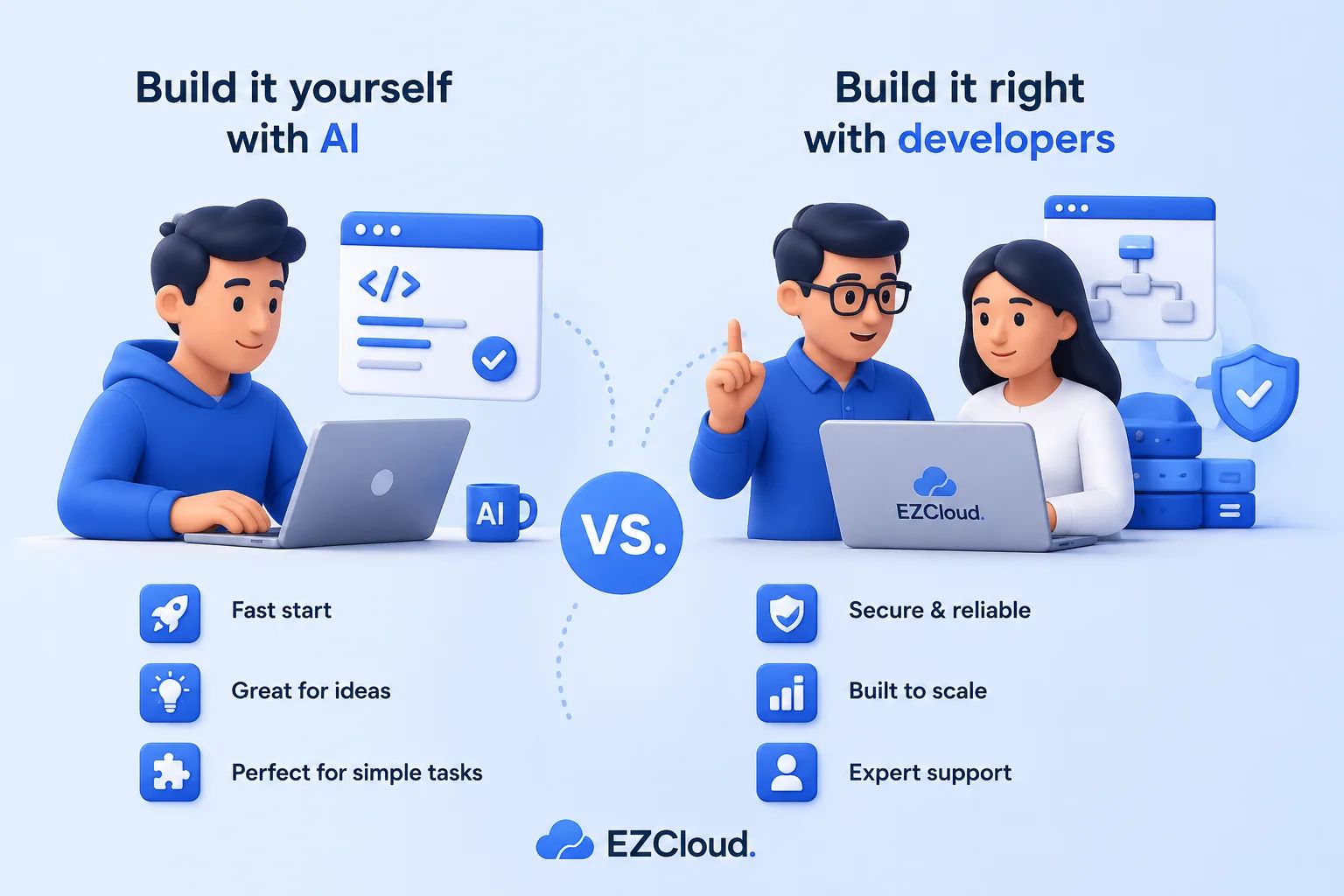
Your AI App Works. So Why Isn't It Ready for Production?
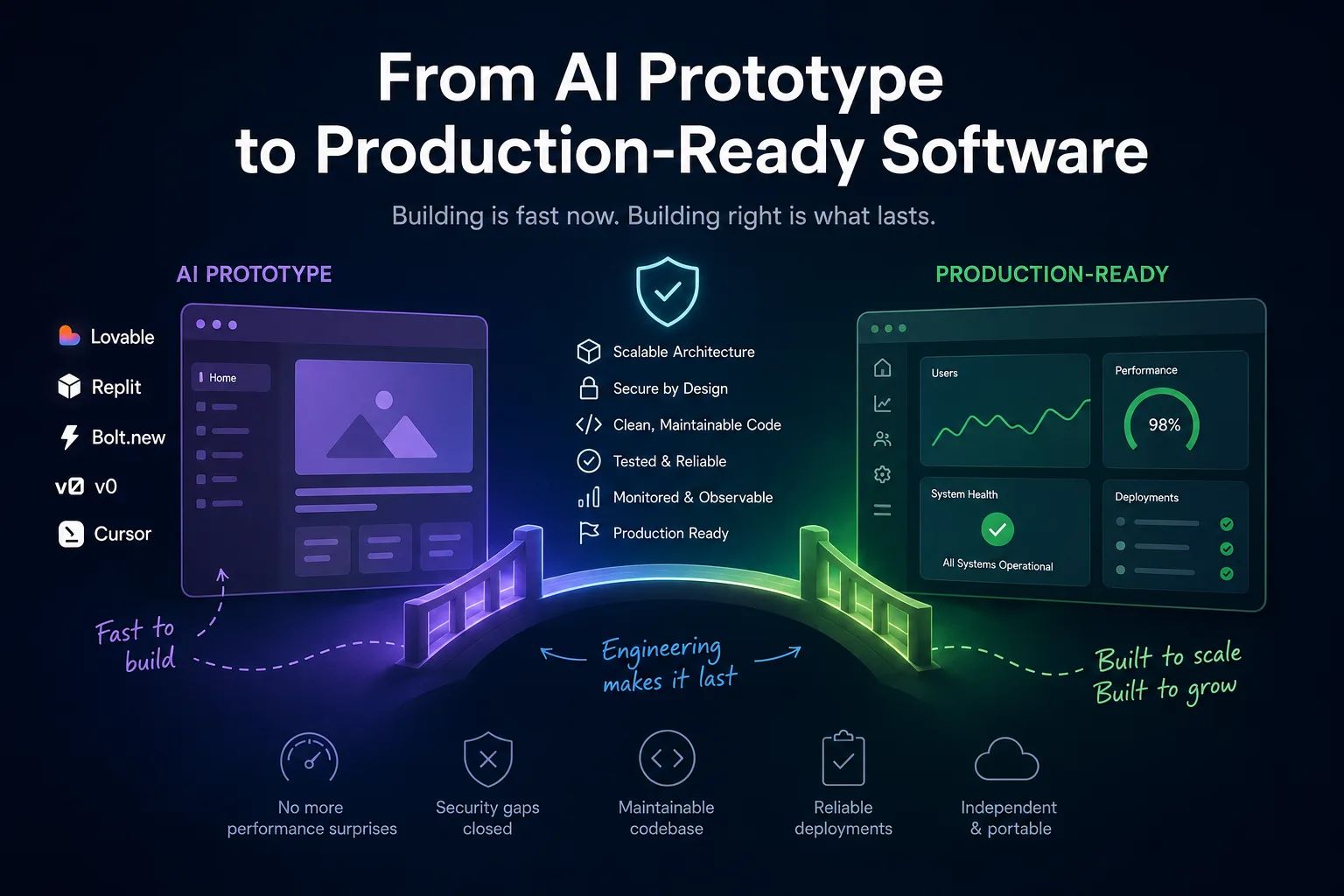
Building software has never been faster.
With platforms like Lovable, Bolt.new, Replit, v0, and Cursor, founders can turn an idea into a working application in a matter of days. Investors see demos sooner, customers can try products earlier, and startups validate ideas without hiring an entire engineering team.
It feels like software development has been reinvented.
In many ways, it has.
But here's the part many teams don't discover until much later:
A working product isn't the same as a production-ready product.
We've seen applications impress investors during a demo and then struggle under the load of just a few hundred real users. We've seen authentication systems that looked fine until security testing exposed critical vulnerabilities. We've seen AI-generated code that became almost impossible to maintain after only a few months of development.
None of this means AI failed.
It simply means AI optimized for one goal - building software quickly.
Production engineering has a different goal - building software that lasts.
The Hidden Cost of Moving Fast
Every startup wants speed.
AI delivers exactly that.
But every shortcut creates assumptions, and assumptions eventually become technical debt.
Most AI-generated applications work well because they're built around the "happy path." Real businesses rarely operate there for long.
Sooner or later, every application has to deal with:
- unexpected user behavior;
- growing databases;
- increasing traffic;
- third-party API failures;
- security threats;
- changing business requirements.
That's where engineering begins.
Five Warning Signs Your AI Application Needs a Review
Your Response Times Keep Increasing
Performance issues usually don't appear during development.
They appear after customers arrive.
Slow database queries, inefficient API calls, and unnecessary processing become increasingly expensive as usage grows.
Every New Feature Feels Harder to Build
If adding a simple feature suddenly requires changes across multiple files, duplicated logic, or fear of breaking existing functionality, your architecture is beginning to work against you.
Nobody Wants to Touch Certain Parts of the Code
Every engineering team eventually identifies "danger zones" in the codebase.
With AI-generated projects, these areas often appear much sooner because the code wasn't designed with long-term maintenance in mind.
Security Was Never Independently Reviewed
Authentication works.
Permissions seem correct.
The application passes manual testing.
That doesn't necessarily mean it's secure.
Many vulnerabilities remain invisible until they're intentionally tested.
You're Planning to Scale
The best time to review architecture isn't after growth.
It's before growth.
Making structural improvements while the system is still manageable is significantly less expensive than rebuilding it after customers depend on it.
What a Production-Readiness Review Actually Does
Many founders assume the next step is rewriting everything.
Usually, it isn't.
A professional engineering review focuses on understanding what already works and identifying what genuinely needs improvement.
At EZ Cloud, our Production-Readiness Audit evaluates:
- application architecture;
- scalability;
- security;
- code quality;
- testing strategy;
- deployment process;
- monitoring;
- operational risks.
Instead of receiving hundreds of pages of documentation, clients receive a practical roadmap with prioritized recommendations and engineering estimates.
The goal isn't to replace your application.
The goal is to make sure it can support your business as it grows.
AI Is Changing Software Development - Engineering Is Still Essential
AI has permanently changed how software is built.
The companies that succeed won't be the ones avoiding AI.
They'll be the ones combining AI's incredible development speed with experienced engineering practices that ensure software remains reliable, secure, and maintainable for years.
That's where prototypes become products.
And that's where businesses begin to scale.