200+ Projects.13 Years of Building Software: What Businesses Really Need From Technology

Technology moves fast.
The way businesses work changes even faster.
When we started Ezcloud in 2013, automation looked very different from what it does today. AI wasn't part of the conversation. Businesses were still spending countless hours moving data between spreadsheets, checking numbers manually, and working around systems that didn't quite fit their needs.
We started Ezcloud because we saw an opportunity to change that.
Not by building software for the sake of building software, but by solving the problems that were getting in the way of running a business.
After 13 years, 200+ projects, and more than 250,000 billable hours, we've learned that the hardest part of software development usually isn't writing the code.
It's understanding the business.
The Software Problem Is Often Not a Software Problem
A company might come to us and say, "We need a new system."
But after talking to the team, we sometimes discover that the real problem is somewhere else.
Maybe employees are entering the same information into three different places.
Maybe a manager spends every Friday preparing a report that could be generated automatically.
Maybe an important process exists only because one employee knows exactly what to do.
Or maybe the business has grown so much that the tools that worked five years ago simply can't keep up anymore.
In these situations, the first step isn't opening a code editor.
It's asking questions.
Why does this process exist? Who uses it? Where does it slow down? What happens when something goes wrong?
Once you understand that, the technology becomes much easier to choose.
AI Has Changed the Game
There is no question that AI is changing software development.
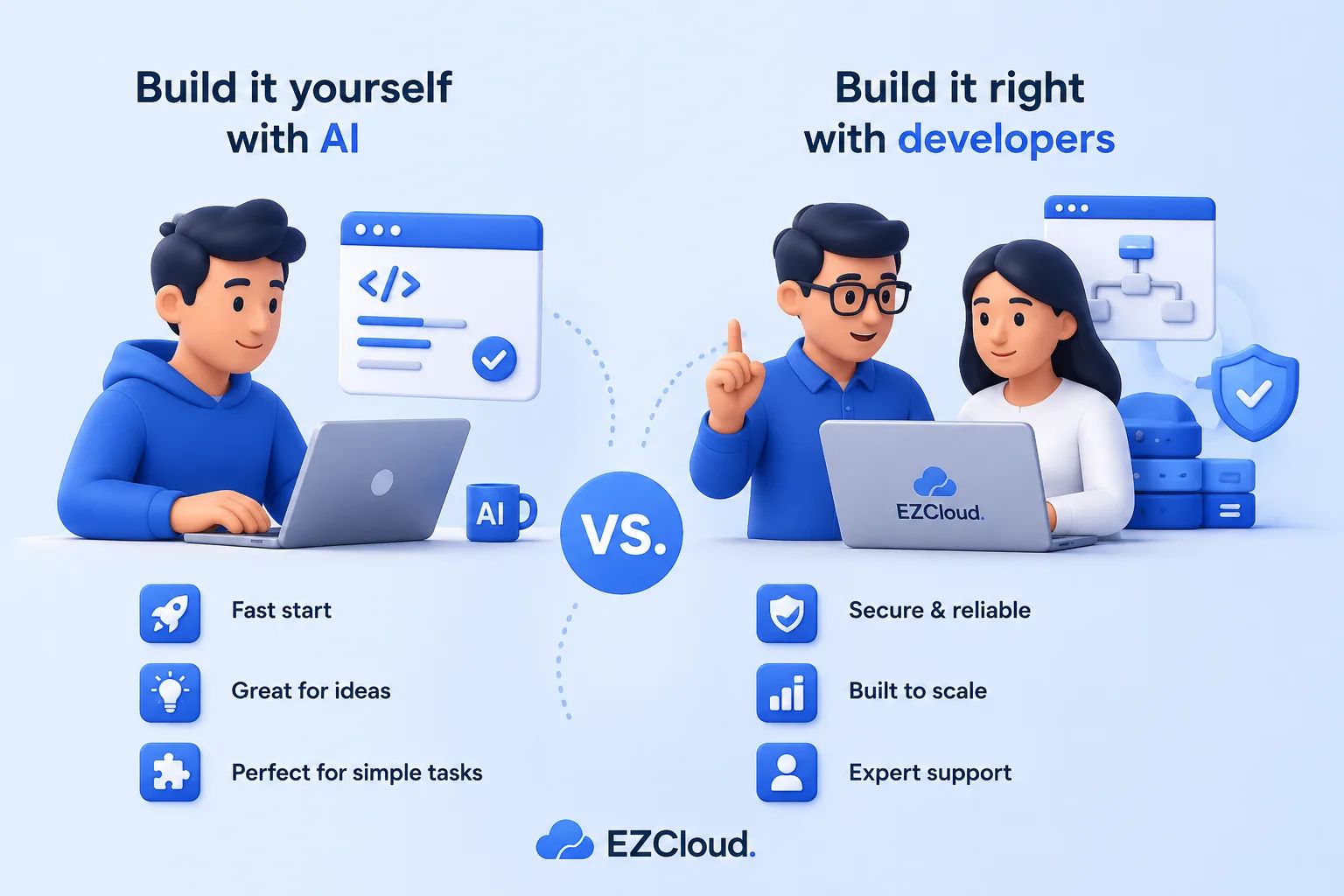
Tools like Claude can help developers move faster, create prototypes, explore ideas, and automate parts of the development process that used to take much longer.
And businesses can now experiment with ideas without needing a large development team from day one.
That's a huge advantage.
But there's also a trap.
Because something can be built quickly doesn't mean it is the right solution.
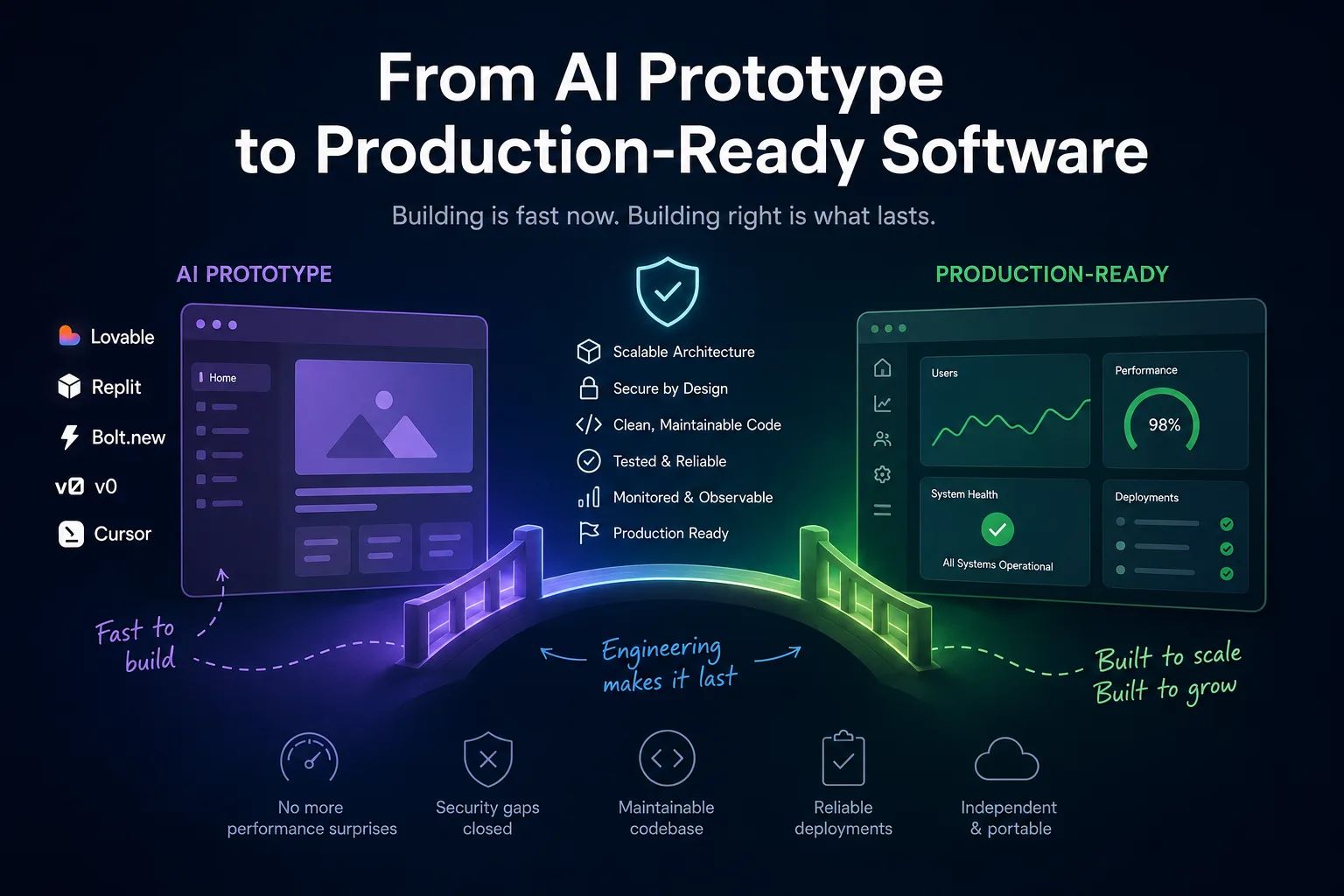
A prototype can prove that an idea works. Production software has to survive real users, real data, real integrations, and real problems.
That's an important difference.
AI can help you build faster. Experience helps you decide what should actually be built.
The Best Automation Is Often Invisible
The most successful automation isn't always the most impressive thing you can show in a demo.
Sometimes it's something employees barely notice anymore.
A report that appears automatically.
An order that moves through several systems without someone copying information.
A notification that is sent at exactly the right time.
A reconciliation process that used to take hours and now happens in the background.
When automation works well, people don't think about the technology.
They simply get their time back.
And that's usually the real goal.
What We've Learned From Different Industries
Over the years, we've worked on solutions for e-commerce, logistics, ERP, accounting, healthcare scheduling, and other complex operations.
The industries are different, but the underlying challenges are surprisingly similar.
Businesses grow. Processes become complicated. Different systems get added over time. Eventually, people start creating workarounds to keep everything moving.
That's often when we get involved.
Our job isn't to force every business into the same technology.
It's to understand how that particular business works and build around its needs.
Sometimes that means custom software.
Sometimes it means automation.
Sometimes AI makes sense.
And sometimes the best solution is simply connecting systems that already exist.
What Comes Next
AI will continue to change how software is built.
Development will become faster. Automation will become smarter. More businesses will be able to create their own tools.
We think that's a good thing.
But technology will never replace the need to understand the business behind it.
After 12 years, our approach is still pretty simple:
Understand the problem. Find the bottleneck. Choose the right technology. Build something people can actually use.
That's what we've tried to do across 200+ projects.
And the fact that most of our clients still come through referrals tells us we're on the right track.
If your team is spending hours on repetitive work, relying on complicated spreadsheets, or building processes around one person's memory, don't assume that's just part of doing business.
It might be a sign that there's a better system waiting to be built.