The Most Expensive Mistake in E-commerce Pricing
At first glance, pricing in e-commerce seems straightforward. Many sellers follow a simple rule: lower the price, win the Buy Box, and increase sales. This approach is common, and in many cases it does work in the short term.
However, over time many sellers start noticing something confusing. Sales are growing and revenue looks healthy, yet profitability does not improve. In some situations it even declines. The reason is that pricing decisions are often made without fully considering the real cost structure behind each product.
The Hidden Problem Behind “Winning” the Price
The issue is usually not competition itself. The real challenge lies in the costs that sit behind the price by hidden cost marketplace fee.
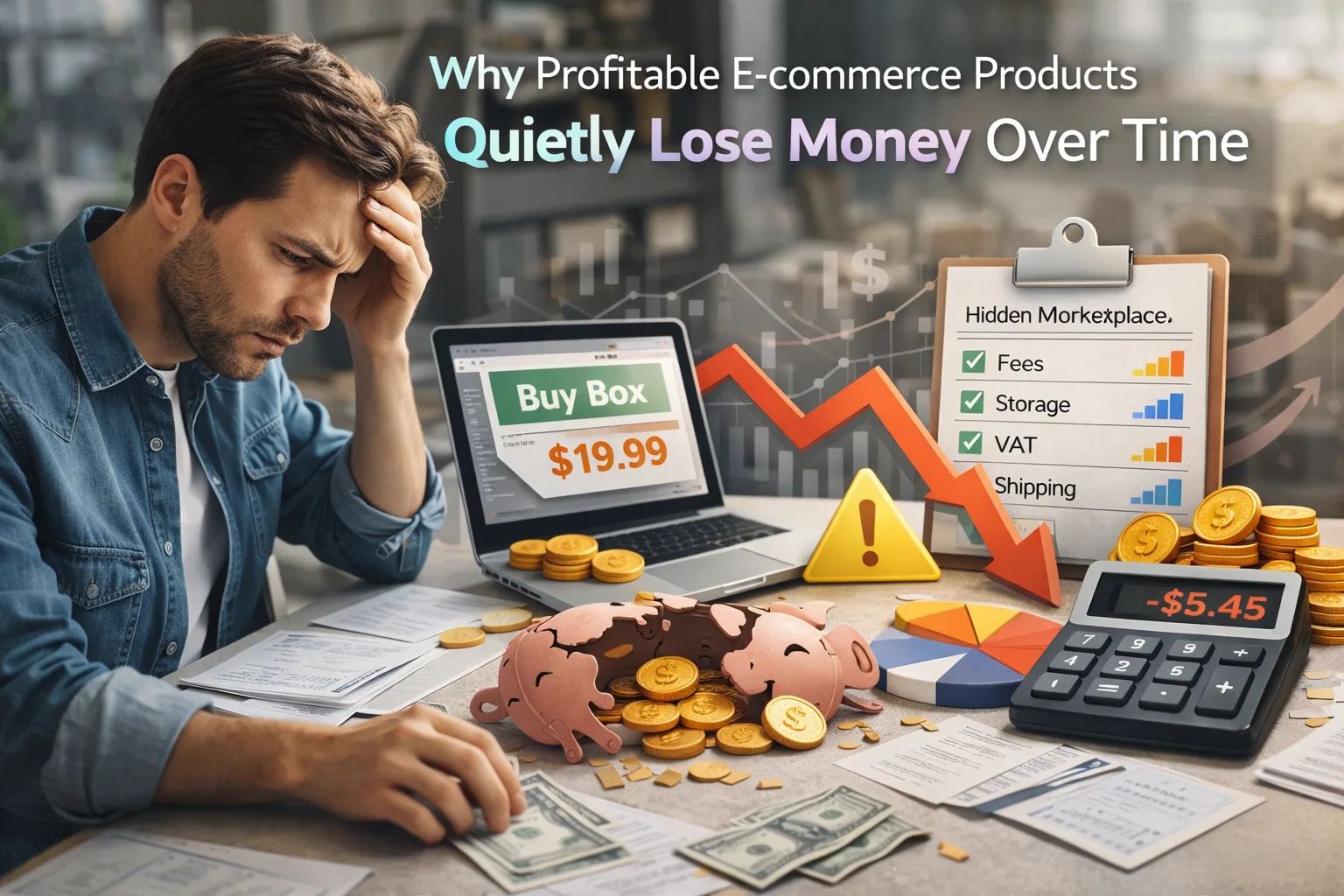
Modern marketplaces involve many different cost components that are not always visible during daily pricing decisions:
- marketplace referral fees
- fulfillment and placement costs
- storage fees, especially long-term storage
- return shipping cost
- international VAT and taxes
- operational and logistics overhead
Each of these costs might seem small on its own. But together they create constant pressure on margins. This means a product can be competitively priced and even win the Buy Box, while still generating very little profit or sometimes even a loss.
Why Traditional Repricing Often Falls Short
Many repricing tools are built to react quickly to market changes. Their primary focus is competitor pricing. They monitor the market and adjust prices automatically in order to stay competitive.
This approach is helpful, but it often overlooks an important question: what does the new price mean for profitability?
When pricing is driven mainly by competitor behavior, it creates a common pattern:
- prices gradually decrease
- sales volume increases
- margins become smaller
- profitability becomes difficult to predict
Instead of supporting business strategy, pricing becomes a reactive process that follows the market.
Pricing Should Work as a System
To build sustainable e-commerce operations, pricing needs to be treated as part of a structured system rather than a simple rule.
That system should include:
- clear visibility of the full cost of each product
- pricing rules designed to protect margins
- automation that reflects real business logic
- consistent pricing decisions across marketplaces
This is the idea behind PriceMaker.
Instead of focusing only on competitor prices, the platform introduces fee-aware pricing logic. This allows sellers to automate pricing decisions while still keeping actual marketplace costs in mind.
From Price Competition to Profit Awareness
The goal of pricing should not be simply to win the Buy Box. The real objective is to win profitably.
This requires a shift in thinking:
- from competitor-based pricing to margin-aware pricing
- from manual adjustments to automated systems
- from short-term wins to long-term sustainability
Because in modern e-commerce, pricing is no longer just a number.
It is a core part of the business system.
Final Thought
If pricing decisions ignore real costs, strong sales alone cannot guarantee a healthy business.
The more important question becomes:
👉 Are you pricing mainly based on competitors
or based on your actual profit?